1
Know the learners
Review rosters, language needs, IEP/504 accommodations, attendance patterns, and any information that helps you anticipate support without reducing students to labels.
It is late summer. The room is quiet, the hallways are still, and the boxes have finally arrived. This is the moment many teachers feel the pull of bulletin boards, posters, and color schemes. Yet strong classroom management begins earlier and deeper than décor. It begins with knowing your students, knowing your goals, and designing the conditions under which learning can actually happen.
This page treats classroom management as an evolving professional practice—especially in social studies, where discussion, source analysis, movement, collaboration, and changing historical themes often require the room itself to adapt.
Before students enter, teachers do more than arrange desks. They prepare to teach people. The strongest planning begins with learner information, support structures, school expectations, and the instructional moves a class will need in order to think, move, talk, write, and participate well.
Review rosters, language needs, IEP/504 accommodations, attendance patterns, and any information that helps you anticipate support without reducing students to labels.
Clarify the tasks your room must support: discussion, direct instruction, note taking, labs, source analysis, collaboration, or independent reading and writing.
Decide how students will enter, get materials, transition, turn and talk, request help, and exit. Management is smoother when movement is planned, not improvised.
Choose which routines must be explicitly taught in the first days of school. Students should not be expected to "just know" what your room requires.
Arrange sightlines, pathways, supply access, board visibility, and teacher mobility before layering in visual identity and decorative touches.
Decor should reinforce belonging, content, and clarity. In social studies, the room can shift with the themes of geography, government, revolutions, civic life, and world events.
Especially in social studies, classroom management is tied to intellectual design. A unit on historical thinking may benefit from direct instruction and source annotation. A constitutional debate may need a seminar formation. A map or timeline investigation may require movement, pair work, and visual display. The room should support the thinking you want students to do.
Strong teachers do not wait for misbehavior to explain expectations. They teach entry routines, discussion norms, material systems, transitions, and learning behaviors early—then revisit them until they become shared habits.
Establish tone, belonging, and immediate predictability. Students should know how to enter, where to sit, what to do first, and how learning begins in this space.
Practice routines in real time: transitions, supplies, attention signals, talk protocols, and how to seek help without derailing the room.
Reinforce expectations while increasing academic challenge. Students begin doing more of the actual work the class will require across the year.
Release responsibility. Prompt less, watch more, and identify routines that still need reteaching. Strong classrooms are calibrated, not assumed.
Return to expectations throughout the year, especially after breaks, schedule changes, new units, or signs that routines no longer fit the class.
Routines reduce uncertainty, save time, and protect learning. They also reduce unnecessary correction because students understand what success looks like before they are judged on it.
Meet students as they enter. A brief greeting builds connection and gives the teacher an immediate read on mood, energy, conflict, and readiness before instruction begins.
Students know where to go, what to do, and how to begin without waiting for public reminders.
Opening tasks settle the room and create a reliable learning launch point.
Plan how notebooks, handouts, and supplies are obtained, used, and returned.
Model turn-taking, listening, accountable talk, disagreement, and evidence-based response.
Teach when devices are used, closed, charged, stored, or redirected.
Clarify what productive silence or focused work actually looks and sounds like.
Define roles, volume, accountability, and what students do when they finish early.
Build a signal or system that protects dignity and keeps the room moving.
Good transitions are practiced, timed, and narrated until they become efficient.
Make closure purposeful: clean-up, reflection, exit tickets, next steps, and dismissal.
Classroom design should make expectations easier to meet. The room affects visibility, movement, noise, access, comfort, and the kinds of interactions that feel natural.
Seating arrangements are not neutral. They shape visibility, discussion, collaboration, proximity, and how students experience a lesson. Choose a formation because it fits the work—not because one arrangement is always best.

Teachers sometimes use recent performance information, support needs, or behavior patterns to think strategically about where students sit and with whom they are paired. That can be useful. It should also be handled with care.
Important note: visible labels like “advanced,” “on grade level,” “below grade level,” or “special needs” should remain part of a private teacher planning system rather than public student-facing labels.
Behavior systems are strongest when they begin with prevention and instruction, not punishment. Calm redirection, predictable consequences, and relationship repair help preserve dignity while keeping the class centered on learning.
Clarify expectations, design engaging instruction, plan transitions, use proximity, and keep students academically involved.
Use prompts, nonverbal cues, brief reminders, or repositioning before escalation becomes necessary.
Apply calm, consistent, school-aligned consequences when behavior requires a clear formal response.
After correction, restore the path back to learning. Reteach, reflect, and rebuild rather than leaving students defined by the moment.
Strong management extends beyond the room itself. Teachers work within a network of families, co-teachers, counselors, case managers, and administrators. Communication should be proactive, clear, and respectful.
Management is iterative. The room that works in September may need to change in November. Observe what the classroom is telling you, then adjust the design, routines, and supports accordingly.
This page can eventually connect directly to your teacher products. For the first build, these two featured cards mirror the resource-to-product flow you used elsewhere.
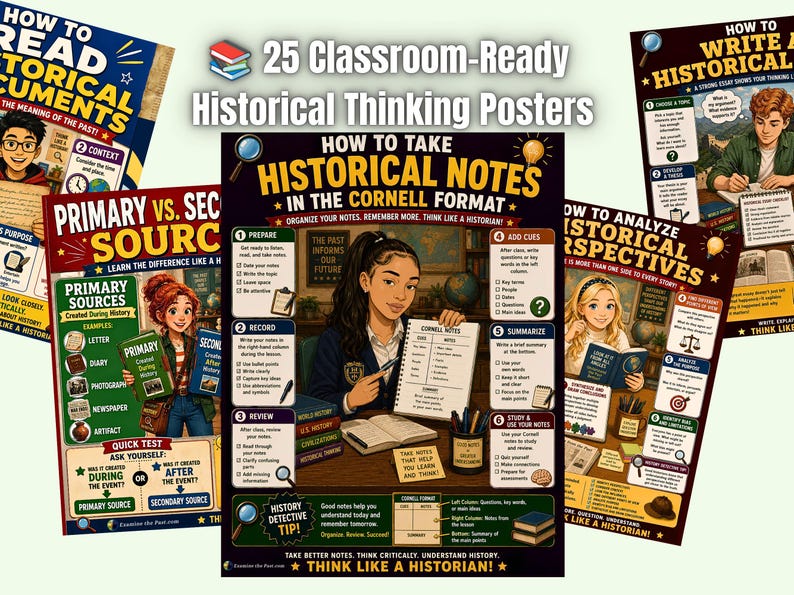
25 classroom-ready historical thinking posters plus 5 bonus advanced posters for grades 5–12, including source analysis, note-taking, maps, timelines, debate, and Socratic seminar skills.
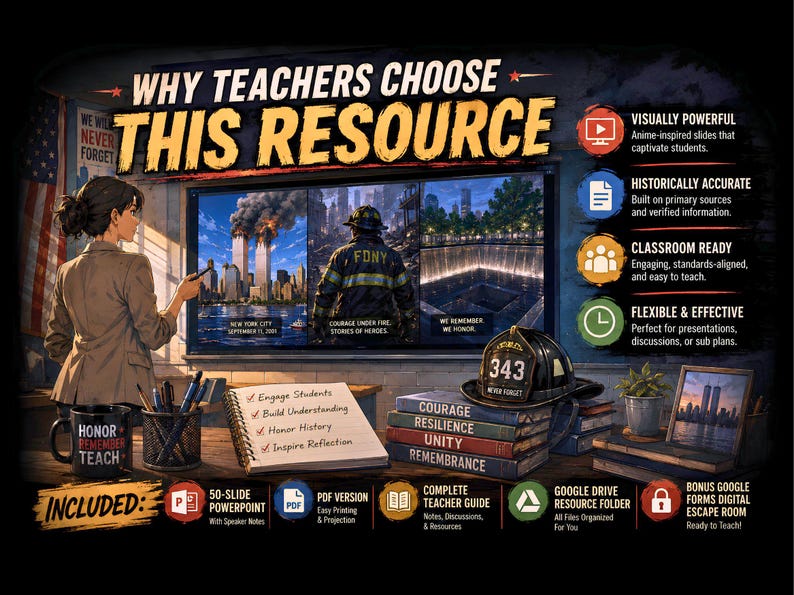
A complete grades 6–12 visual history learning experience with PowerPoint, teacher guidance, and digital investigation materials.
The build is grounded in evidence-based classroom management guidance that emphasizes explicitly taught expectations, strong relationships, predictable structures, student support, proactive behavior systems, and instructional choices that sustain engagement.